
REGIONAL ANATOMY · EXPLORE & UNDERSTAND
Left upper-arm anatomy
Explore the left humerus, biceps, triceps and other upper-arm muscles, with movement basics and guidance on when symptoms need care.
Introduction
The left upper arm lies between the shoulder and elbow. This atlas region contains the humerus and selected muscles, including the two heads of biceps and three heads of triceps. Compare the front and back of the model. Use the left shoulder and elbow links to continue along the same limb.
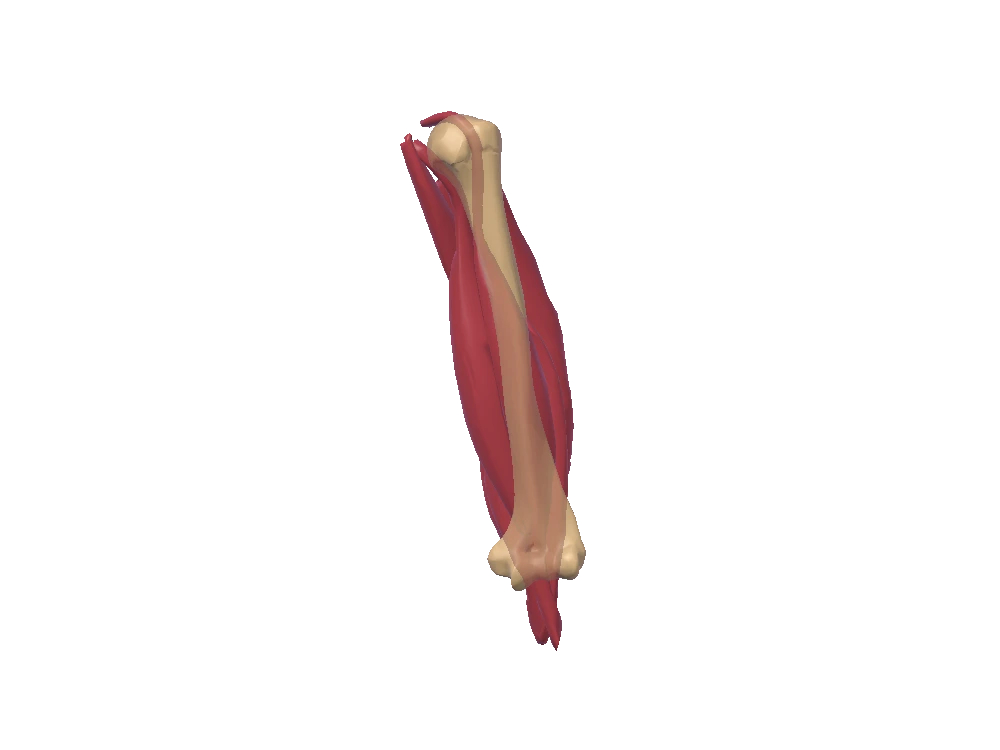
Key structures
- Left humerus
- The single bone of the upper arm.
- Long head of left biceps brachii
- Bends the elbow.
- Lateral head of left triceps brachii
- Straightens the elbow.
- Left brachialis
- Helps bend the elbow.
- Left coracobrachialis
- Moves the arm forwards.
How it moves
Biceps and brachialis bend the elbow; triceps straightens it. Lifting a shopping bag and bringing a cup towards your mouth are everyday examples to picture while exploring. The model does not measure strength.
Common concerns
Falls, accidents and sports can injure arm bones, muscles or connective tissues. Fractures, tendon problems and nerve problems are among the possibilities. A sore upper arm is a symptom to describe, not a diagnosis to select from the model.
When to see a doctor
Book an appointment if arm pain lasts for a few weeks. Sudden arm pain with chest pressure or heaviness needs emergency help. After an injury, severe pain, inability to use the arm or increasing swelling needs urgent assessment. An oddly shaped arm or new numbness needs emergency care.
Explore the interactive model
Rotate the reference model, switch the available layers and select a structure. The controls below open on left upper arm.
If the embedded atlas is difficult to use on your screen, open left upper arm in the full atlas.
Frequently asked questions
Why do biceps and triceps have several labels?
The atlas identifies their separate heads. The names describe parts of a muscle, so explore them together before comparing neighbouring muscles.
Can I rule out a fracture because I can move my arm?
No. If you suspect a break after an injury, seek medical assessment. Examination and an X-ray may be needed.
Sources
These references support the anatomy and care information above. Model coverage is checked against the atlas catalogue.
- OpenStax: Bones of the Upper LimbLink checked
- OpenStax: Muscles of the Pectoral Girdle and Upper LimbsLink checked
- MedlinePlus: Arm Injuries and DisordersLink checked
- NHS: Elbow and arm painLink checked
- NHS: Broken arm or wristLink checked
Read our editorial standards and anatomy model credits and limitations.