
REGIONAL ANATOMY · EXPLORE & UNDERSTAND
Left forearm anatomy
Explore the left radius, ulna and forearm muscles, with palm-turning and grip basics, common concerns and signs to seek medical care.
Introduction
The left forearm region includes the radius, ulna and many muscles between the elbow and wrist. Some muscles have more than one model part; repeated labels do not always mean additional muscles. Compare the bones with muscles on the palm side and back. Continue to the left hand to put the long forearm structures in context.
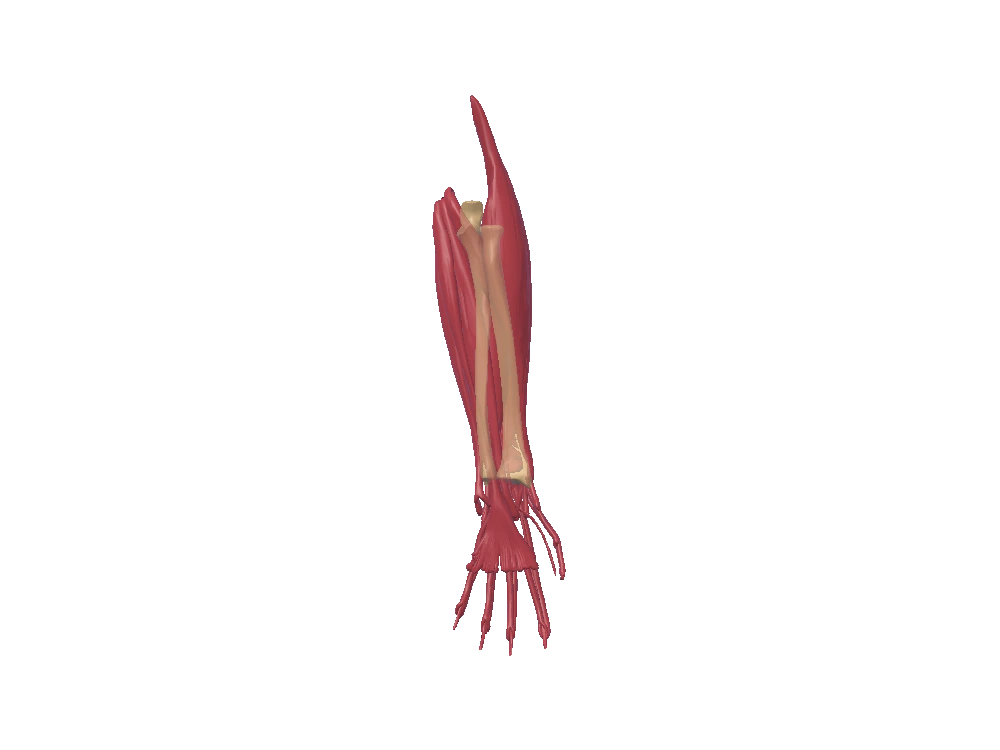
Key structures
- Left radius
- The forearm bone on the thumb side.
- Left ulna
- The forearm bone on the little-finger side.
- Left flexor digitorum profundus
- Bends the fingers.
- Left extensor digitorum
- Straightens the fingers.
- Left flexor pollicis longus
- Bends the thumb tip.
How it moves
The radius changes position relative to the ulna as the palm turns upwards or downwards. Forearm flexors bend the wrist and fingers; extensors straighten them. Opening a jar combines several actions to picture while exploring.
Common concerns
Repeated tasks can be associated with gradually developing forearm pain, stiffness, weakness or tingling. RSI is a broad term used for these problems, and the same task does not affect everyone alike. Tendon irritation can cause pain around a joint.
When to see a doctor
Seek assessment if symptoms persist or worsen. Discuss changes to repeated work tasks and a gradual return to activity rather than prolonged complete rest. An injury followed by severe pain, increasing swelling or difficulty using the arm needs urgent assessment. Deformity or new numbness after injury needs emergency care.
Explore the interactive model
Rotate the reference model, switch the available layers and select a structure. The controls below open on left forearm.
If the embedded atlas is difficult to use on your screen, open left forearm in the full atlas.
Frequently asked questions
What is a tendon?
A tendon connects muscle to bone, transmitting the pull that helps create movement. Tendons can become painful after repeated injury.
Does forearm discomfort prove my workstation caused it?
No. Repetition can contribute, but arm pain often has several influences. Describe the tasks and symptoms to a clinician rather than assuming one cause.
Sources
These references support the anatomy and care information above. Model coverage is checked against the atlas catalogue.
- OpenStax: Bones of the Upper LimbLink checked
- OpenStax: Muscles of the Pectoral Girdle and Upper LimbsLink checked
- NHS: Broken arm or wristLink checked
- NHS: Repetitive strain injury (RSI)Link checked
- MedlinePlus: TendinitisLink checked
Read our editorial standards and anatomy model credits and limitations.