
REGIONAL ANATOMY · EXPLORE & UNDERSTAND
Left Thigh Anatomy and Movement
Explore the left thigh's femur, quadriceps, hamstrings and inner-thigh muscles, with everyday movement, common injury concerns and care guidance.
Introduction
Start with the left femur, then compare muscles on the front, back and inner side of this model. Continue to the left knee to follow their lower attachments, or open the left lower leg to see the next region.
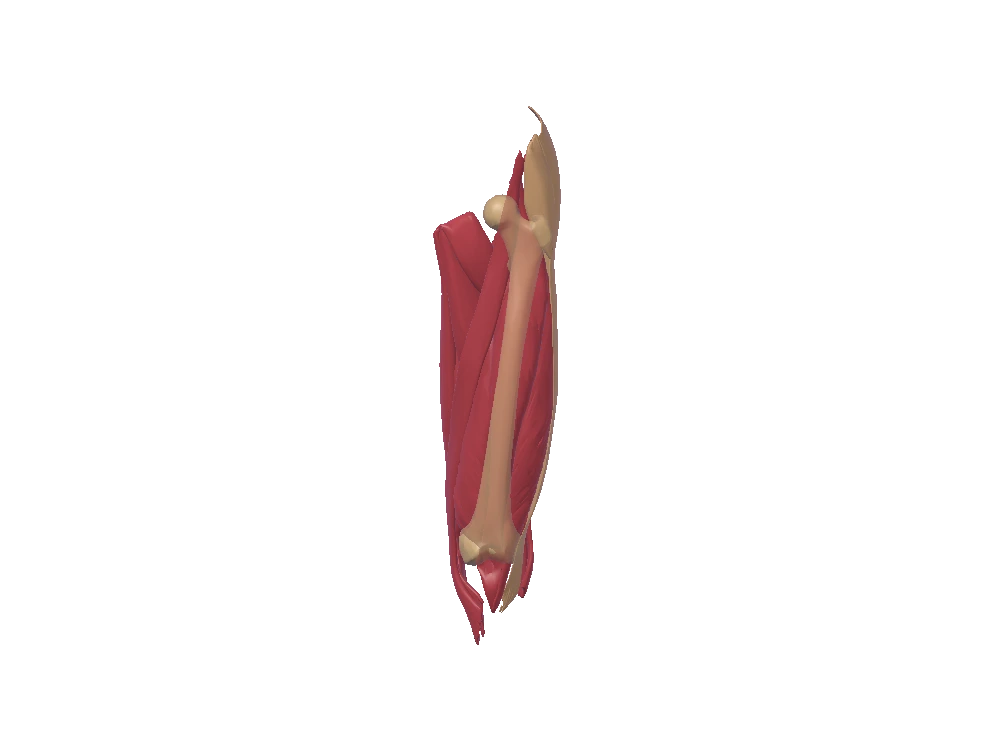
Key structures
- Left femur
- Thigh bone connecting the hip and knee.
- Left rectus femoris
- Front-thigh quadriceps muscle that straightens the knee and bends the hip.
- Left vastus medialis
- Inner part of the quadriceps, helping straighten the knee.
- Left semitendinosus
- Back-thigh hamstring that bends the knee and extends the hip.
- Left adductor longus
- Inner-thigh muscle that brings the thigh inward.
How it moves
The quadriceps straighten the knee. Hamstrings bend it and help move the thigh backward. Inner-thigh adductors bring the thigh toward the body's midline; these jobs combine during walking and rising from a chair.
Common concerns
A sudden pull during running can injure a hamstring, sometimes causing swelling or bruising. The pain's location alone cannot show whether muscle, tendon or another structure is involved.
When to see a doctor
Stop an activity that causes sudden thigh pain. Seek prompt care for worsening pain, substantial bruising or difficulty standing. New pain with swelling in one leg needs urgent assessment for a possible blood clot. Chest pain or breathlessness alongside those leg symptoms is an emergency.
Explore the interactive model
Rotate the reference model, switch the available layers and select a structure. The controls below open on left thigh.
If the embedded atlas is difficult to use on your screen, open left thigh in the full atlas.
Frequently asked questions
Are quadriceps and hamstrings the same muscles?
No. Front-thigh quadriceps straighten the knee; back-thigh hamstrings bend it.
Can the model show a muscle tear?
No. It shows a reference arrangement of structures, without an examination, scan findings or information about your symptoms.
Sources
These references support the anatomy and care information above. Model coverage is checked against the atlas catalogue.
- OpenStax: Appendicular Muscles of the Pelvic Girdle and Lower LimbsLink checked
- OpenStax: Bones of the Lower LimbLink checked
- NHS: Hamstring InjuryLink checked
- NHS: DVT (Deep Vein Thrombosis)Link checked
Read our editorial standards and anatomy model credits and limitations.