
REGIONAL ANATOMY · EXPLORE & UNDERSTAND
Abdomen anatomy: abdominal wall and trunk muscles
Explore abdominal wall anatomy, from rectus abdominis to the obliques, and understand why this muscle model cannot identify causes of belly pain.
Introduction
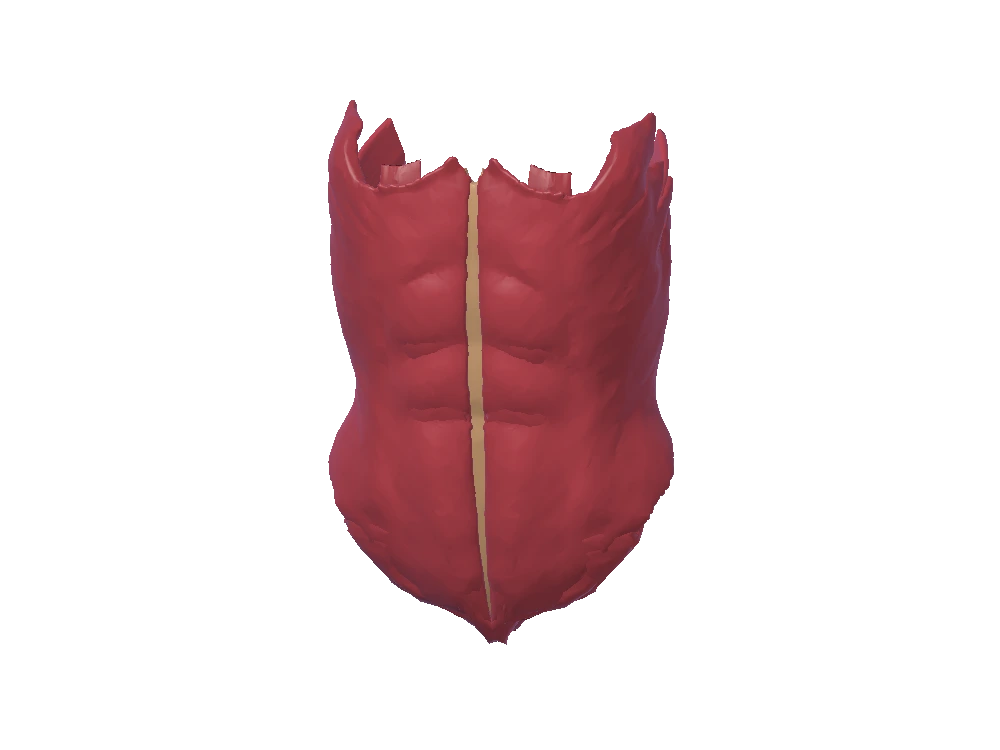
The abdominal wall is a layered arrangement of muscles and connective tissue around the belly. This region shows paired muscles at the front, sides and back of the abdomen, plus the linea alba at the midline. The stomach, bowel, liver, kidneys and other internal organs are absent. This view therefore explores the abdominal wall, rather than the digestive system.
Key structures
- Rectus abdominis
- Paired muscles along the front of the belly help bend the trunk.
- External and internal obliques
- Layered muscles at the sides contribute to rotation and side-bending.
- Transversus abdominis
- A deeper abdominal muscle helps compress the abdomen.
- Linea alba
- A band of connective tissue joins the abdominal wall at its front midline.
How it moves
Rectus abdominis helps bend the trunk forward. The obliques contribute to turning and side-bending, while transversus abdominis compresses the abdomen. Quadratus lumborum contributes to side-bending at the back.
Common concerns
Belly symptoms can involve bloating, constipation, indigestion or other conditions. A sensation near an abdominal muscle does not establish that the muscle is injured. Keep track of timing, associated symptoms and whether discomfort keeps returning, rather than using the model to name a diagnosis.
When to see a doctor
Arrange medical advice for persistent or recurring abdominal pain, ongoing bloating or a new lump. Seek urgent advice if pain suddenly worsens. Get emergency help for sudden severe abdominal pain, vomiting blood, heavy bleeding from the bottom or black sticky stools. These signs require assessment beyond a muscle model.
Explore the interactive model
Rotate the reference model, switch the available layers and select a structure. The controls below open on belly & trunk.
If the embedded atlas is difficult to use on your screen, open belly & trunk in the full atlas.
Frequently asked questions
Is the linea alba a muscle?
No. It is connective tissue between the two sides of the abdominal wall.
Can this model explain pain after eating?
No. The digestive organs are absent, and symptoms after eating have several possible causes. Persistent, recurring or worrying pain needs medical advice, even when you can point to a specific location.
Sources
These references support the anatomy and care information above. Model coverage is checked against the atlas catalogue.
- OpenStax: Muscles of the abdominal wall and thoraxLink checked
- NHS: Stomach acheLink checked
- NIDDK: Symptoms and causes of indigestionLink checked
Read our editorial standards and anatomy model credits and limitations.