THE ESSENTIALS
- Use a validated monitor and a cuff that fits your upper arm.
- Rest, position consistently and record both scheduled readings.
- Agree review and urgent-action instructions with your clinician.
Agree what you are measuring and why
Home blood-pressure readings can help a clinician assess a pattern or review treatment. They do not replace an appointment, and feeling well does not establish that your pressure is healthy. The top, systolic number reflects pressure as the heart pumps; the lower, diastolic number reflects pressure between beats. Both are recorded in millimetres of mercury, written mm Hg.
Before starting, ask why you are monitoring, which arm to use, when to measure and when the results will be reviewed. Also ask what to do about unexpectedly high or low readings. This guide explains measurement, not an individual target or a diagnosis. Pregnancy and care after birth need their own clinical plan.
Check the monitor and cuff first
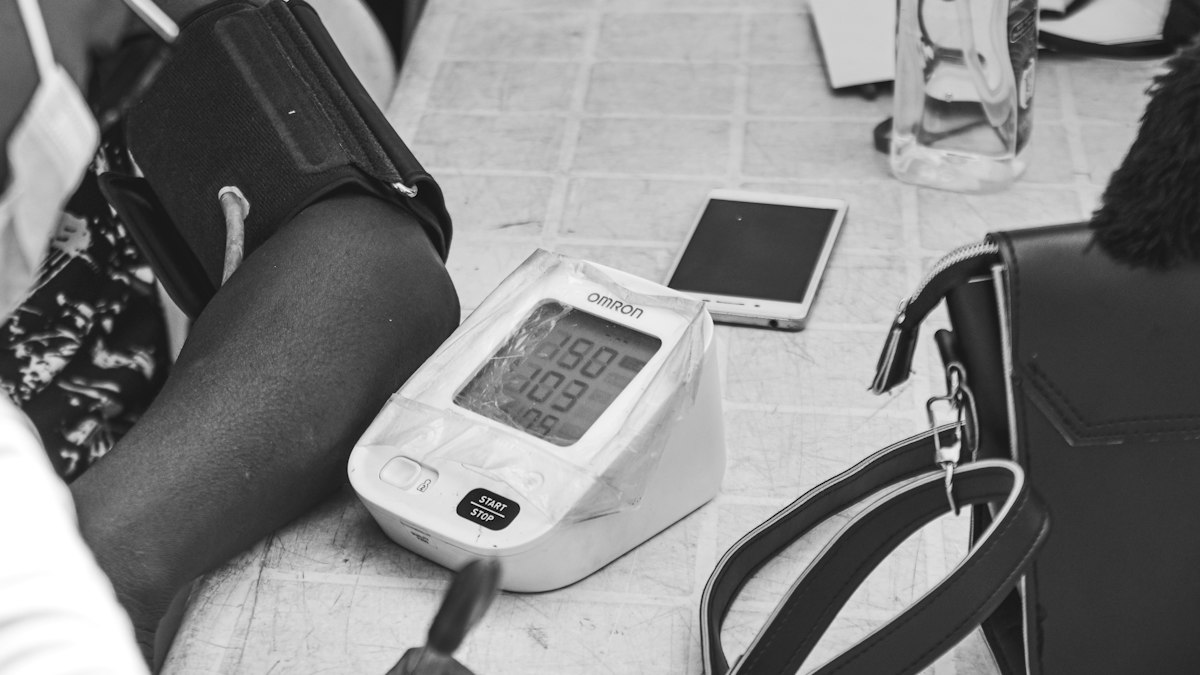
Ask a clinician or pharmacist about a validated automatic upper-arm monitor. Validation concerns measurement accuracy; an attractive display or a phone connection does not establish it. Measure around your upper arm and check the cuff range. A cuff that is too small or too large can distort the result. A device should also be suitable for the person using it, including during pregnancy.
Take the monitor and cuff to an appointment so someone can watch your technique and compare equipment. Keep the instructions available. If fitting or operating it is difficult, ask for a demonstration rather than guessing the cuff position.
Settle into a repeatable position
For a routine reading, avoid smoking, exercise and caffeinated drinks during the preceding 30 minutes, and empty your bladder. Rest quietly for at least five minutes. Sit upright with your back supported and feet flat on the floor. Support the arm on a table, with the cuff at heart level. Use bare skin rather than placing the cuff over a sleeve.
Follow the device instructions for fitting and positioning the cuff. Let your hand and arm relax, breathe normally and stay quiet while it measures. Talking, moving or answering messages makes the session less consistent.
Keep the whole record
At each scheduled session, take two readings one minute apart unless your healthcare team gives different instructions. Write down both sets of numbers with the date and time, rather than saving only the lower result. Many monitoring plans use morning and evening sessions, but the number of days and timing should come from the clinician requesting the record.
A simple notebook is enough. Keep the readings in order and bring the record, or the monitor memory, to your review. If a session did not follow the usual routine, add a brief note instead of silently deleting it. Do not keep inflating the cuff until you obtain a preferred number.
Turn the numbers into a useful conversation
Bring a current medicine list, including non-prescription medicines, vitamins and supplements. Write down your two or three main questions: Were these measurements taken correctly? Is a pattern emerging? What should happen next? Confirm who will review the readings and how to contact the team if you have concerns before that review.
Do not stop or change blood-pressure medicines because one home result looks reassuring or worrying. Ask for help with side effects or an unexpected pattern. Recording is valuable when it supports a care plan, rather than becoming a search for one perfect number.
KNOW WHEN TO GET HELP
When self-care isn’t enough
- Chest pain, severe breathlessness, new weakness or numbness, difficulty speaking or a sudden vision change needs emergency assessment. Do not delay to complete a monitoring session.
- For adults who are not pregnant or recently postpartum, a top (systolic) reading above 180 mm Hg OR a bottom (diastolic) reading above 120 mm Hg needs immediate attention. If you have no new concerning symptoms, wait at least one minute and recheck. If either number remains above its limit, contact a healthcare professional immediately. With emergency symptoms, get emergency help without waiting to repeat the reading.
- During pregnancy or after giving birth, follow your maternity team’s urgent-action plan. Do not apply the non-pregnant adult limits as a reason to delay assessment.
In a medical emergency, call 112 in India or your local emergency number elsewhere. Get help immediately.
Sources & further reading
These sources inform this educational guide. They do not imply endorsement or clinical review of Knowledge Your Health.